Wine Club's Geography Series:
How a vineyard’s climate affects what's in your glass
Part 2: Rivers & Valleys
In short:
Explore the world of wine from a different angle with Wine Club’s Geography series.
Why are there so many vineyards along rivers and valleys?
Whether for natural resources, agriculture or trade, people have settled near life-giving waterways for millennia. And where people go, wine follows. As Roman legions spread through Europe, sailing along the likes of the Rhine and Danube rivers, they left behind grape plantings that would lay the foundations for the continent’s finest wine regions.
The world may look a little different today, but when it comes to what makes a vineyard flourish or flounder, not much has changed. Success is highly dependent upon the conditions in which grapes are grown. Before we look at the impact rivers have on winemaking, let’s first consider a vine’s basic needs in order to thrive.
What essentially makes a wine taste great?
Soil, sunshine and water are the key components, with the need for consistent weather patterns. From bud to berry, grapes must be able to ripen slowly, creating the perfect balance of sugar and acidity. Balanced grapes help to craft balanced wine – and less work for the winemaker come harvest time. A changeable climate can prove to be hugely problematic: too much sugar in grapes results in a flabby wine that lacks freshness. Too much acidity and the wine will taste sour and fruitless.
The world’s greatest wine regions have prospered thanks to their steady, dependable climates. It’s no coincidence that rivers are a common theme across these famous landscapes. So what part do they play?
A large mass of water acts as a climate moderator, giving vines a safe, consistent environment in which to grow. Their surrounding riverbanks and valleys have formed over millions of years, so an added advantage are unique, mineral-rich soils which further impact the aromas and flavours that end up in your glass.
Let’s take a deep dive into three of Europe’s most famous wine regions – and their very significant rivers.
The Loire Valley — The Loire River
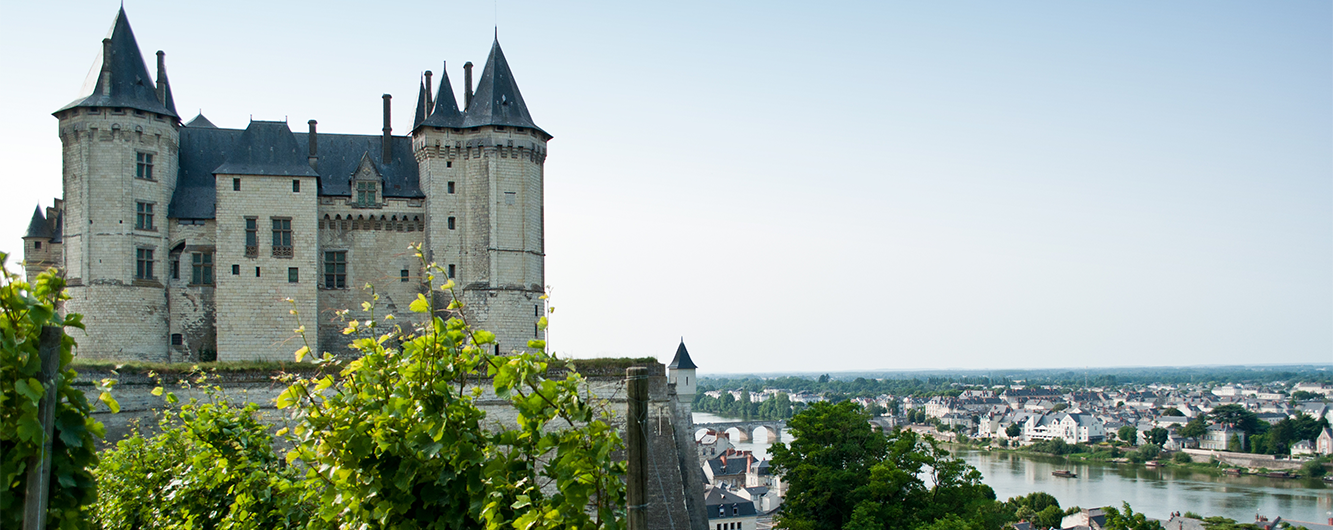
Running over 600 miles long, from the Massif Central along to the Atlantic Coast, the Loire is the longest river in France. The Loire Valley that envelops it is home to 87 wine appellations, which gives an idea of the landscape’s diversity. By way of comparison, the largest volume of French wine production comes from Bordeaux, which houses 57 appellations.
Known as the Garden of France, the lush and green Loire Valley has a fascinating historical heritage. During the 13th and 16th centuries, its stunning scenery and rich agricultural land made it a favourite retreat for the French court and the Paris elite. Today, the Loire RIver remains integral to the region’s wine trade.
Generally speaking, autumns and winters are mild, while summers are hot and often very humid. Given the length of the Loire River, it’s unsurprising that there’s a variety of soil types along its path. In the coastal Pays Nantais subregion, you can expect to find vineyards containing granite, sand and stones. These all have one thing in common: they are well draining, which is of prime importance when you learn that the Loire Valley is one of the wettest regions in France.
Towards the eastern edge of the region, south of Orléans, the Sauvignon Blanc wines of Sancerre and Pouilly-Fumé are largely responsible for putting the Loire Valley on the worldwide map, with the soils of the two regions being almost as famous as its wines. The clay and limestone-rich soil is called Kimmeridgian, and its formation dates back almost 150 million years to when France, as we know it today, was covered by a sea. It may have long dried up but the lasting effect is a unique soil full of fossilised shells and sea creatures, which help to produce steely wines with crisp acidity and refreshing minerality.
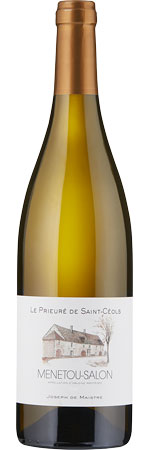
Directly southwest of Sancerre lies Menetou-Salon. It’s the only other appellation in the region to benefit from Kimmeridgian soil – and like its neighbour, the focus here is on Sauvignon Blanc. Working from their converted 13th-century Benedictine priory, Le Prieuré de Saint-Céols is a producer who excels at getting the best from the grape.
Le Prieuré de Saint-Céols Menetou-Salon features in Wine Club’s Tour case.
Rioja — The Ebro River
From the border of Portugal, right the way across to Barcelona, the Ebro River winds through countless regions of Spain. Close to 600 miles in length, it's one of the longest rivers in the Iberian Peninsula, second only to the Tagus.
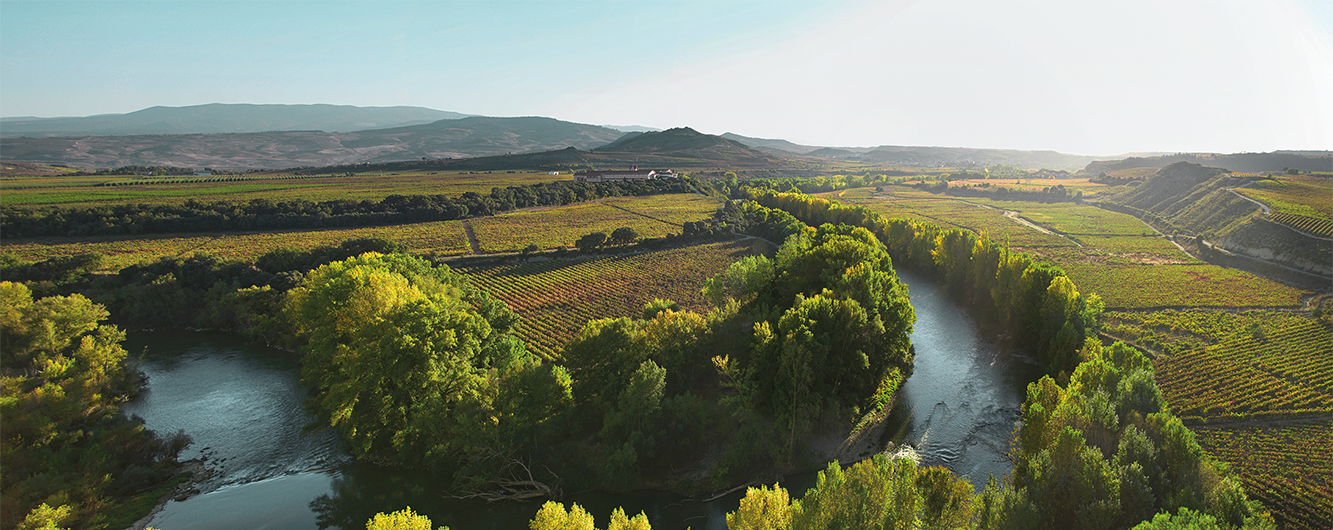
Head south from the port city of Bilbao and you’ll find yourself in Spain’s most famous wine region: Rioja. Snaking through valleys and mountain ranges, the Ebro River has carved out the region’s much celebrated vineyards.
Its peninsular location and mountainous terrain means Rioja benefits from a mix of Atlantic, Continental and Mediterranean climates, and just like in the Loire Valley, the Ebro and its tributaries act as a moderator to the elements. Spain may be renowned for its warm and sunny weather but Rioja’s high altitude results in cold winters with relatively high rainfall. Thankfully, this is offset by the region’s well-draining clay and limestone soils.
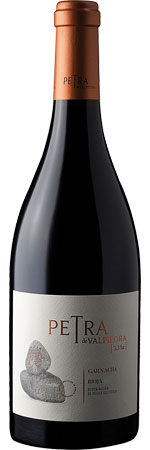
One winery that is heavily influenced by the river is Finca Valpiedra in the subregion of La Rioja Alta. The estate sits on a bend of the Ebro, where sandy, pebbly soils define the winemaking. The terrain here is so unique, it gave the winery its name (piedra means ‘stone’). The stones are similar to those found in Châteauneuf-du-Pape – the iconic Southern French wine region nestled along the eastern bank of the Rhône River.
Valpiedra’s vines grow on naturally terraced riverbank plots. The stones help to regulate the moisture in the soil, so vines don’t become dehydrated on hot summer days. They also retain the heat of the sun, meaning grapes can ripen uninterrupted by cooler night-time temperatures. Here’s where the Ebro has another trick up its sleeve: water holds heat for longer than soil or air, so the river slows down this temperature drop – which is especially important in warding off winter frosts.
Discover Finca Valpiedra’s flagship Rioja in Wine Club’s Tour case.
The Moselle Valley — The Moselle River
Rivers naturally cross borders. But they can also define them. The Moselle River originates in the Vosges mountains of Northeastern France. After almost 200 miles, it then divides Luxembourg from Germany for 20 miles, before heading inland to the birthplace of cool-climate Riesling: the ancient Moselle Valley in Southwest Germany.
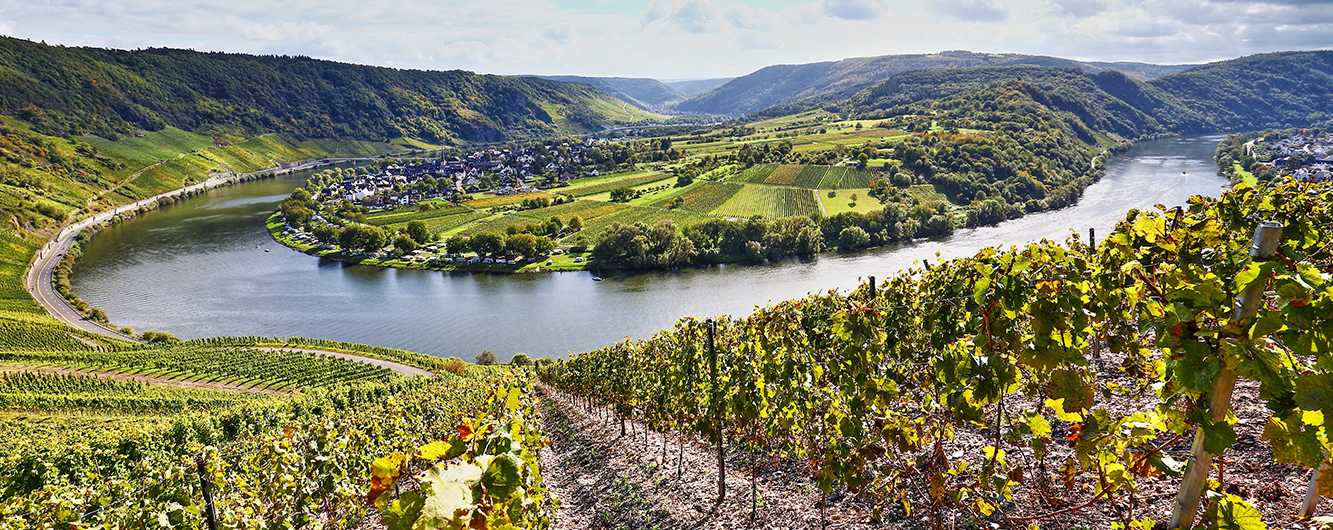
Sticking with its more common German name, the Mosel River stretches 338 miles long. It discharges into the Rhine in Koblenz, and nowhere else along its route does it meander quite so much as in the Mosel Valley. Its steep slopes and winding river bends may make it one of the most beautiful wine regions in the world – but it is also one of the most challenging.
Just like the extreme valleys of the Danube and Douro, hillsides here have long been carved into terraces. Some are perilously steep, with inclines of up to 65 degrees. This may prove problematic for the winemaker (tractors and machinery is impossible to use, for instance), but their efforts result in wines unparalleled in their complexity and ageability.
Want to know more?
Perhaps from now on, when you try a wine from a historic valley or riverbank, you won’t just get the satisfaction of a delicious bottle. You may consider each sip to be the culmination of centuries of human innovation, dedication and tradition. And that’s definitely worth raising your glass to.
To explore even more fantastic wines that are influenced by rivers and their surrounding valleys, take a look at our latest Wine Club cases here.