Order in the next HOURS MINUTES  for NEXT DAY delivery  on • FREE NEXT/NOMINATED-DAY ON ORDERS £250+ (SELECT AT CHECKOUT) • FREE STANDARD DELIVERY ON £99+
Shop Local for Collection before 3pm on Saturday 11th to guarantee you'll have drinks in time for kickoff. Our stores are open until 7pm on Saturday*

Majestic Guides: Altitude, how does it affect what’s in your glass?


Wine Club's Geography Series:

How a vineyard’s climate affects what's in your glass
Part 1: Altitude


In short:

From Mendoza’s sky-scraping mountains, 

to the steep 65-degree slopes of Germany’s Mosel – 

join Wine Club in exploring grapes that thrive in extreme landscapes. 


Majestic


A natural way to start exploring the world of wine is to go by region and country. There is plenty of variety to be found this way, but Majestic’s Wine Club has unveiled a fresh angle in understanding how the contents of a bottle makes it from grape to glass. 

Wine Club’s new Geography series explores how vines across the globe are affected by their surroundings.

Altitude is the first release of the series. You may have heard the term ‘high-altitude vines’. But what does it mean and why does it matter? Usually defined by height or slope, high-altitude vineyards are those set more than 500 metres above sea level, or planted on hills with greater than a 30% gradient.  

The highest vineyards in the world can be found in Tibet at a mighty 3,563 metres above sea level. But in terms of what’s commercially available, wine from Argentina’s Mendoza region takes top spot. There are vineyards here that sit at 3,111 metres.

Vines grown at high-altitude don’t have it easy. But the challenges they face are actually beneficial – for the plant itself as well as the winemaker. Stressed vines produce better wine. When a vine has to struggle to grow, it will throw its energy into pushing roots deeper into the ground, and rather than trying to flourish with additional roots and leaves, it will concentrate on growing grapes – its only way to survive and reproduce. Given the extremity of its circumstances, the vine’s berries will be small, which equates to intense flavours – the ideal starting point for any winemaker come harvest time.


The elements

Weather has an enormous impact on winemaking. It’s the sole reason for every harvest – or vintage, as it’s referred to in wine – yielding a different result year on year.

Anyone who has journeyed through a mountain range knows that high-altitude terrain is prone to more variable weather conditions than that in valleys or flat plains. For starters, hills and mountains are subjected to far more rainfall. But given the gradient, a natural run-off of water means vine roots avoid getting waterlogged, saving grapes from dilution.

At the other end of the weather scale comes bright, brilliant sunshine. The higher the elevation, the greater the sun exposure. This results in higher temperatures which in turn equates to more concentrated flavours in maturing grapes. The sun’s solar rays are also more powerful, which causes grapes to develop thicker skins, and therefore more robust tannins.

Once the intensity of the day has cooled, high-altitude vines go on to experience much cooler nighttime temperatures. This fluctuation is known as diurnal shift – and it’s more drastic the higher you climb. Vines benefit from diurnal shift in two ways. Firstly, it allows grapes to retain their acidity, which leads to fresh and elegant wines. Secondly, the daily break from the heat means the grape growing period is extended. And the longer they have to ripen, the more complex flavours have time to develop. A large swing in temperature creates grapes that are more balanced – with plenty of fruity flavour thanks to warm days, matched with freshness, aromatics and acidity thanks to cool nights.


Besides nature, what else makes the environment extreme?

It’s not just the vines that are subject to additional challenges. It takes a courageous winemaker to tackle vines on steep slopes. Germany’s Mosel region is known for its perilously steep vineyards. Here, a winemaker must work entirely by hand, as machines are unable to cling to the hillside. Handling grapes by hand prevents damage to their skins and also reduces a winemaker’s carbon footprint.

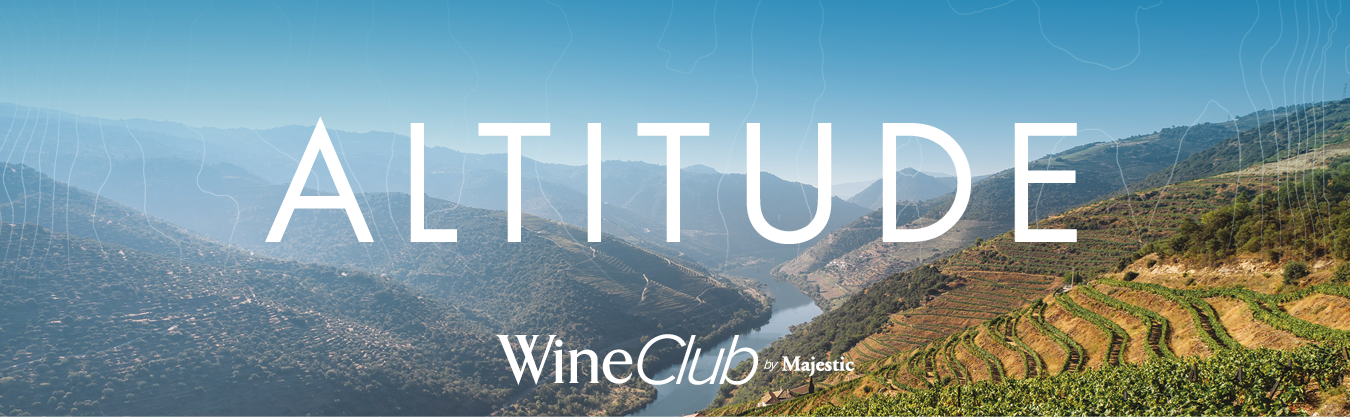
Other regions such as Austria’s Wachau and Portugal’s Douro Valley have ‘terraced’ vineyards. The gradients are so great that winemakers have cut away at the hillside to create level steps in order to conquer the terrain – a technique mastered by the Romans in their cultivation of Europe. 

Whatever the challenges, for most winemakers, the task is a labour of love but, in some regions, an increasing necessity too. As the world gets warmer through climate change, higher sites keep grape-growing possible.

Each bottle in our latest Wine Club case has been hand-selected to give you a broad picture of how geography impacts what’s in your glass. In some cases, altitude or incline has allowed winemakers to grow unconventional varieties. In others, it brings new finesse to old regional favourites. By savouring every sip, you’ll be making the hard work that goes into making these wines worthwhile.

Stay tuned for the second instalment of our Geography series which will be released in January 2023. 

Learn more about Wine Club’s latest case here


BROWSE OUR RANGE