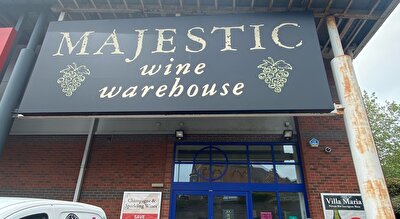
Welcome to Majestic Worcester

Worcester

Contact Information

T:
01905 26924
F:
01905 26924
E:

Opening hours

Mon - Fri: 10am - 8pm
Sat: 9am - 7pm
Sun: 10am - 5pm
Bank Hol: 10am - 5pm

Store Address

Unit 1a
Shrub Hill Retail Park
Tallow Hill
Worcester
WR5 1JU
United Kingdom
  • Free Chiller Bin Loan
  • Free Courses
  • Free Delivery
  • Free Glass Loan
  • Free Parking
  • Free Tasting

News & Events

Latest news from the store

  • Feb17

    17 February 2012 - 23 February 2012, 10:00 - 20:00

    Instore Tasting - Wines of South Africa

    A selection of wines from our South African range open to taste in store

  • Mar21

    21 March 2012, 18:00 - 20:00

    Wine Course

    Our relaxed and informal introduction to wine, from grape to glass.

    Booking required - reserve a place...
  • New!

    German Wine...A Myriad of Classifications!

    Ross

    Germany is one of the great wine producing countries in the world, yet it often does not receive the recognition that it's stunning wines deserve. Personally, I feel that one of the main reasons for this negativity towards German wine is the myriad of often somewhat confusing and contradictory wine classifications. My aim in this article is to provide a basic explanation of the different styles of German wine.

    Recently there has been a reclassification of wine in the EU to attempt to bring a degree of standardisation to all different wines in many different EU countries. The two categories are PDO (Protected Designation of Origin) and PGI (Protected Geographical Indication). In simple terms, PDO wines are generally regarded as the higher of the two classes, with wines under this classification perceived to be of better quality and subsequently a higher price. In each category, each EU country can register what are defined as 'Traditional Terms' which are names or terms that are traditionally associated with that specific country.

    The German for PDO is Geschutzte Ursprungsbezeichnung with 2 traditional terms regisistered with the EU. These are as follows:

    - Qualitatswein bestimmter Anbaugebiete (QbA) - these wines have to be produced from grapes grown exclusively in the one of 13 designated regions (Anbaugebiete), blending with wines from other regions is not permitted. The labels for these must show the region of origin and an indication of the style of wine.

    - Pradikatswein - these wines may only be made with grapes made from a single district (Bereich) within an Anbaugebiete. This is where German wines begin to get a little confusing as there are six further levels of Pradikat traditional terms inside this classification. These levels are defined by the must weight (the density of grape juice) at the time of harvesting. I will now discuss these further:


    Kabinett - The most delicate of the Pradikat wines, with a light body and high acidity demonstrating flavours of green apple and citrus. They can either be dry (12%) or sweet (8-9%) with differing alcohol levels.


    Spatlese - This is a late harvest wine with more concentrated flavours and a firmer body than that of Kabinett wines. The aromas are particularly citrusy with hints of stone based fruits. Again these are made in both the dry and sweet styles but will have a higher alcohol content than that of Kabinett.


    Auslese - These are wines made from individually selected, extra ripe bunches of grapes. With a slightly richer and riper style than Spatlese they are still made in both sweet and dry styles. However, this is the highest Pradikat wine that can appear in the dry style.
    Beerenauslese (BA) - An exhilaratingly complex wine with refreshing acidity, these are rare and expensive sweet wines. They are made from individually, hand selected grapes.


    Eiswein - This wine literally does describe it's name 'ice-wine'. The grapes for this are left on the vine until the weather is cold enough to freeze them. When the grapes undergo crushing, the frozen water is skimmed off leaving a concentrated must. Once the must is fermented it produces an intensely concentrated, fruity wine with very high acidity levels.


    Trockenbeerenauslese (TBA) - Wines that are produced in minute quantities, the best of which rank among the world's most expensive wines. The grapes will have shrivelled to tiny raisins upon harvesting producing wines with high residual sugar levels and high acidity with a typical alcohol content of 8%.

    Following PDO, we have the German PGI (Geschutzte Geographische Angabe) wines, with 2 registered traditional terms.

    - Landwein - Dry or off dry wines with a must weight that must be higher than Deutscher Wein.

    - Deutscher Wein - These are wines that allow for blending of wines from across Germany. They are mainly responsible for cheap, inexpensive export wines.

    The following are examples of some of the wines that we sell that incorporate the above labelling:
    - Dr L Riesling 2010 - This is a Qualitatswein wine, low in alcohol, with a fruity and refreshingly crisp taste. £7.49 per bottle
    - Donnhoff Riesling Kabinett 2008 - A classic example of medium-dry Kabinett Riesling with elegant, mineral notes and a fruity, acid based finish. £14.99 per bottle
    - Munsterer Kapellenberg Riesling Spatlese - An estate bottled, still wine with citrus fruit aromas. At 10% alcohol it is slightly higher than the others (both 8.5%). £7.99 per bottle
    - Prinz Von Hessen Riesling 2009 - This is another Kabinett Riesling, however, unlike the Donnhoff this is made in the dry style. £9.99 per bottle

    As you can see, the German wine range is dominated by Riesling! I hope that I have provided an understanding of the detailed classifications of German wine. If you are still confused though why not tweet us @majesticwor or even better pop down and see the team here in store!

  • New!

    The Six Nations: the pride, the passion...and a glass of wine?

    Jack

    There's few things that I look forward to more in a year than the start of February. Yes, it's cold, it's dark and it's usually raining but even this fails to dampen my spirits because it's the month of the Six Nations and the prospect of five weekends of international rugby fills me with glee. We're five matches into the season but my excitement still knows no limitations. Can Wales handle the pressure of their expectant supporters? Can England create chances and unleash that threatening back-line? How will Scotland react following their good showing in Cardiff? Will the Italians take another scalp now they have moved to the impressive Stadio Olimpico?

    This article is resulting from a discussion between myself and my colleagues in Worcester regarding 'which wine best describes each of the teams in the Six Nations', I hope you find our insights both entertaining and helpful.

    Firstly, England, the traditional powerhouse of Rugby in the northern hemisphere. The most prized scalp of virtually every other rugby playing nation on earth. English rugby has traditionally been built on strong forward power with a metronomic kicker in place to score the points. So we're looking for an enviable wine with plenty of body. With this in mind, I thought of the Chateau Meaume from Bordeaux. A classically structured example of Bordeaux, that time and again, proves popular both with our staff and customers. A nose of fruitcake, spice and plum fruit are accompanied by a flavour of smoky cedar on the palate. Excellent value at £7.99 when you buy two or more.

    We now cross to the other side of the bridge, into Wales, the self-styled land of song. Welsh rugby is traditionally built on fast thinking, free-running backs zipping about the field to the sounds of 'Bread of Heaven'. The Grand-Slam winning classes of the 1970's talked of playing 'Champagne Rugby'. The Nicolas Feuillate 2004 is the perfect reflection of this, it mixes freshness and fruity flavours with a subtle yeastiness which makes it the perfect Champagne for a party. For a vintage Champagne it's avaliable for the incredible price of just £19.

    North of the border now to the 'Auld Enemy'. Scottish rugby like it's English counterpart is based on the dominance of the forwards, the body of the team. This factor combined with their iconic national anthem 'O'Flower of Scotland' led me to think of Scotland as the 5 Puttonyos from Royal Tokaji in Hungary. This fanatastic example of dessert wine has a nose of honeysuckle, orange peel and cinnamon, with a large body and a clean refreshing acidity on the palate. Something to wow your guests at a dinner-party, the 5 Puttonyos is priced at £19.99.

    Off of the mainland and across the Irish Sea, where we're met by the men in green. The Irish team can be viewed as under-achieving on their potential, but they always look dangerous and play with real fire-in-the-belly. Thus, we're after a somewhat undiscovered wine that is perhaps yet to live up to it's full potential. The Leyda Riesling Reserva from Chile came to mind. A pure and clean wine with a nose of mandarin, orange and green apples alongside a flint-like characteristic. Precise and slim on the palate, there's a refreshing acidity which would see this wine make an excellent partner to seared scallops. Great value at £7.99 when you buy two or more.

    Across the English Channel into the world of French magic, when on-song, Les Bleus possess the power to make your jaw drop with magical running rugby. Their game is based around a strong pack with a quick, free thinking and interchangable scrum-half. One slip up and they'll slice you apart, running in a length of the field try. Thus, an elegant wine with plenty of length on the palate. A wine that will partner food but one that drinks perfectly well on it's own, plenty of body with a variety of flavours. The Paul Mas Malbec from Southern France came to mind, flavours of ripe Plum and Blackberry are joined on the palate by subtle herby notes thanks to a 10% blend of Cabernet Franc (currently open to taste from Monday 13th February for 5 days). Enjoy at cool room temperature either on it's own or with barbecued meats or a selection of cheeses. £6.99 when you buy 2 or more bottles

    Last but by no-means least, the Azzurri. Newcomers to the tournament, they joined in 2000 and have since taken the scalps of Scotland, Wales and famously France. The passion that the Italians demonstrate is truly humbling. They're everybody's second team and have developed some truly world class players in Diego Dominguez (who also represented Argentina), Alessandro Troncon and more recently, Sergio Parisse. Their game is best described as 'route one' Rugby, very little in the way of subtlety, more along the lines of smash, bang and wallop! Stefan's passion for Italian reds and a fascinating chat with Gianpaolo (the producer, Twitter: @mymorellino) at our 'Winter Wine Evening' influenced my decision here. Italian Rugby is best reflected in the Poggioargentiera from Morrelino di Scansano. This is an approachable medium-bodied Tuscan red with ripe fruit flavours and has much potential for development over the next 5 years. An excellent wine at £8.99 when you buy two or more.

  • New!

    The Majestic Bargain Hunt

    Stefan

    UPDATE 22/2: We are running out of Bargain Hunt wines at a fast rate, with just loose bottles left. Before setting off to the store, give us a call and we can go through what we have left.

    Give us a call (0190526924) an email (wor@majestic.co.uk) or even tweet us (@majesticwor) for further information!

  • New!

    German Wine...A Myriad of Classifications!

    Ross

    Germany is one of the great wine producing countries in the world, yet it often does not receive the recognition that it's stunning wines deserve. Personally, I feel that one of the main reasons for this negativity towards German wine is the myriad of often somewhat confusing and contradictory wine classifications. My aim in this article is to provide a basic explanation of the different styles of German wine.

    Recently there has been a reclassification of wine in the EU to attempt to bring a degree of standardisation to all different wines in many different EU countries. The two categories are PDO (Protected Designation of Origin) and PGI (Protected Geographical Indication). In simple terms, PDO wines are generally regarded as the higher of the two classes, with wines under this classification perceived to be of better quality and subsequently a higher price. In each category, each EU country can register what are defined as 'Traditional Terms' which are names or terms that are traditionally associated with that specific country.

    The German for PDO is Geschutzte Ursprungsbezeichnung with 2 traditional terms regisistered with the EU. These are as follows:

    - Qualitatswein bestimmter Anbaugebiete (QbA) - these wines have to be produced from grapes grown exclusively in the one of 13 designated regions (Anbaugebiete), blending with wines from other regions is not permitted. The labels for these must show the region of origin and an indication of the style of wine.

    - Pradikatswein - these wines may only be made with grapes made from a single district (Bereich) within an Anbaugebiete. This is where German wines begin to get a little confusing as there are six further levels of Pradikat traditional terms inside this classification. These levels are defined by the must weight (the density of grape juice) at the time of harvesting. I will now discuss these further:


    Kabinett - The most delicate of the Pradikat wines, with a light body and high acidity demonstrating flavours of green apple and citrus. They can either be dry (12%) or sweet (8-9%) with differing alcohol levels.


    Spatlese - This is a late harvest wine with more concentrated flavours and a firmer body than that of Kabinett wines. The aromas are particularly citrusy with hints of stone based fruits. Again these are made in both the dry and sweet styles but will have a higher alcohol content than that of Kabinett.


    Auslese - These are wines made from individually selected, extra ripe bunches of grapes. With a slightly richer and riper style than Spatlese they are still made in both sweet and dry styles. However, this is the highest Pradikat wine that can appear in the dry style.
    Beerenauslese (BA) - An exhilaratingly complex wine with refreshing acidity, these are rare and expensive sweet wines. They are made from individually, hand selected grapes.


    Eiswein - This wine literally does describe it's name 'ice-wine'. The grapes for this are left on the vine until the weather is cold enough to freeze them. When the grapes undergo crushing, the frozen water is skimmed off leaving a concentrated must. Once the must is fermented it produces an intensely concentrated, fruity wine with very high acidity levels.


    Trockenbeerenauslese (TBA) - Wines that are produced in minute quantities, the best of which rank among the world's most expensive wines. The grapes will have shrivelled to tiny raisins upon harvesting producing wines with high residual sugar levels and high acidity with a typical alcohol content of 8%.

    Following PDO, we have the German PGI (Geschutzte Geographische Angabe) wines, with 2 registered traditional terms.

    - Landwein - Dry or off dry wines with a must weight that must be higher than Deutscher Wein.

    - Deutscher Wein - These are wines that allow for blending of wines from across Germany. They are mainly responsible for cheap, inexpensive export wines.

    The following are examples of some of the wines that we sell that incorporate the above labelling:
    - Dr L Riesling 2010 - This is a Qualitatswein wine, low in alcohol, with a fruity and refreshingly crisp taste. £7.49 per bottle
    - Donnhoff Riesling Kabinett 2008 - A classic example of medium-dry Kabinett Riesling with elegant, mineral notes and a fruity, acid based finish. £14.99 per bottle
    - Munsterer Kapellenberg Riesling Spatlese - An estate bottled, still wine with citrus fruit aromas. At 10% alcohol it is slightly higher than the others (both 8.5%). £7.99 per bottle
    - Prinz Von Hessen Riesling 2009 - This is another Kabinett Riesling, however, unlike the Donnhoff this is made in the dry style. £9.99 per bottle

    As you can see, the German wine range is dominated by Riesling! I hope that I have provided an understanding of the detailed classifications of German wine. If you are still confused though why not tweet us @majesticwor or even better pop down and see the team here in store!

  • New!

    The Six Nations: the pride, the passion...and a glass of wine?

    Jack

    There's few things that I look forward to more in a year than the start of February. Yes, it's cold, it's dark and it's usually raining but even this fails to dampen my spirits because it's the month of the Six Nations and the prospect of five weekends of international rugby fills me with glee. We're five matches into the season but my excitement still knows no limitations. Can Wales handle the pressure of their expectant supporters? Can England create chances and unleash that threatening back-line? How will Scotland react following their good showing in Cardiff? Will the Italians take another scalp now they have moved to the impressive Stadio Olimpico?

    This article is resulting from a discussion between myself and my colleagues in Worcester regarding 'which wine best describes each of the teams in the Six Nations', I hope you find our insights both entertaining and helpful.

    Firstly, England, the traditional powerhouse of Rugby in the northern hemisphere. The most prized scalp of virtually every other rugby playing nation on earth. English rugby has traditionally been built on strong forward power with a metronomic kicker in place to score the points. So we're looking for an enviable wine with plenty of body. With this in mind, I thought of the Chateau Meaume from Bordeaux. A classically structured example of Bordeaux, that time and again, proves popular both with our staff and customers. A nose of fruitcake, spice and plum fruit are accompanied by a flavour of smoky cedar on the palate. Excellent value at £7.99 when you buy two or more.

    We now cross to the other side of the bridge, into Wales, the self-styled land of song. Welsh rugby is traditionally built on fast thinking, free-running backs zipping about the field to the sounds of 'Bread of Heaven'. The Grand-Slam winning classes of the 1970's talked of playing 'Champagne Rugby'. The Nicolas Feuillate 2004 is the perfect reflection of this, it mixes freshness and fruity flavours with a subtle yeastiness which makes it the perfect Champagne for a party. For a vintage Champagne it's avaliable for the incredible price of just £19.

    North of the border now to the 'Auld Enemy'. Scottish rugby like it's English counterpart is based on the dominance of the forwards, the body of the team. This factor combined with their iconic national anthem 'O'Flower of Scotland' led me to think of Scotland as the 5 Puttonyos from Royal Tokaji in Hungary. This fanatastic example of dessert wine has a nose of honeysuckle, orange peel and cinnamon, with a large body and a clean refreshing acidity on the palate. Something to wow your guests at a dinner-party, the 5 Puttonyos is priced at £19.99.

    Off of the mainland and across the Irish Sea, where we're met by the men in green. The Irish team can be viewed as under-achieving on their potential, but they always look dangerous and play with real fire-in-the-belly. Thus, we're after a somewhat undiscovered wine that is perhaps yet to live up to it's full potential. The Leyda Riesling Reserva from Chile came to mind. A pure and clean wine with a nose of mandarin, orange and green apples alongside a flint-like characteristic. Precise and slim on the palate, there's a refreshing acidity which would see this wine make an excellent partner to seared scallops. Great value at £7.99 when you buy two or more.

    Across the English Channel into the world of French magic, when on-song, Les Bleus possess the power to make your jaw drop with magical running rugby. Their game is based around a strong pack with a quick, free thinking and interchangable scrum-half. One slip up and they'll slice you apart, running in a length of the field try. Thus, an elegant wine with plenty of length on the palate. A wine that will partner food but one that drinks perfectly well on it's own, plenty of body with a variety of flavours. The Paul Mas Malbec from Southern France came to mind, flavours of ripe Plum and Blackberry are joined on the palate by subtle herby notes thanks to a 10% blend of Cabernet Franc (currently open to taste from Monday 13th February for 5 days). Enjoy at cool room temperature either on it's own or with barbecued meats or a selection of cheeses. £6.99 when you buy 2 or more bottles

    Last but by no-means least, the Azzurri. Newcomers to the tournament, they joined in 2000 and have since taken the scalps of Scotland, Wales and famously France. The passion that the Italians demonstrate is truly humbling. They're everybody's second team and have developed some truly world class players in Diego Dominguez (who also represented Argentina), Alessandro Troncon and more recently, Sergio Parisse. Their game is best described as 'route one' Rugby, very little in the way of subtlety, more along the lines of smash, bang and wallop! Stefan's passion for Italian reds and a fascinating chat with Gianpaolo (the producer, Twitter: @mymorellino) at our 'Winter Wine Evening' influenced my decision here. Italian Rugby is best reflected in the Poggioargentiera from Morrelino di Scansano. This is an approachable medium-bodied Tuscan red with ripe fruit flavours and has much potential for development over the next 5 years. An excellent wine at £8.99 when you buy two or more.

  • New!

    The Majestic Bargain Hunt

    Stefan

    UPDATE 22/2: We are running out of Bargain Hunt wines at a fast rate, with just loose bottles left. Before setting off to the store, give us a call and we can go through what we have left.

    Give us a call (0190526924) an email (wor@majestic.co.uk) or even tweet us (@majesticwor) for further information!

  • Feb22

    Some wines I've enjoyed recently...

    Stefan

    Customers are always asking us what we as staff have enjoyed drinking recently, so I thought I'd write a couple of lines on this.

    Last weekend I knew I was having a slow cooked Beef Stew with Mediterranean herbs. A wine with plenty of fruit but also body was required, so I decided to aim for our Portuguese section and plumped for Ramos Reserva 2010 from the Alentejo region (£6.99 when you buy any 2 Portuguese wines). Its a wonderfully smooth warming wine, with an abundance of berried fruit and sweet spice, and a bit of a steal at the price if you ask me: plus Alentejo is a wonderful wine region that is largely undiscovered.

    For Sunday recently I was asked to bring over a bottle of White Burgundy. This isn't an easy choice to make as there are so many great wines to choose from here, so I decided to be a little bit different and went for a Chardonnay from Limoux in the Pyrennean foothills. Coming from a high altitude vineyard, the Domaine l'Aigle Limoux Chardonnay 2009 made by Gerard Bertrand (£8.49 when you buy 2 or more) displays the classic characteristics of an elegant buttery Chardonnay with plenty of apple and lemon flavours underpinned by hints of hazlenut. It went down extremely well needless to say.

    Lastly, I wanted to revisit one of my favourite discoveries from a year ago: the gorgeous 'El Chaparral' de Vega Sindoa Old Vine Garnacha, 2009 from Navarra in Spain (£7.99 when you buy 2 or more bottles). A vibrant mixture of Red and Black fruit are balanced by well integrated tannins, and it has such a luxouriously smooth finish. It was a great partner to Chicken stuffed with Pesto and wrapped in Bacon.


    I will add more wines I enjoyed thoroughly over the coming weeks. 

  • Feb3

    Fine Wine Friday

    Ross

    For our Fine Wine Friday this week we have opened the fantastic Chateau Larrivet Haut-Brion from the Pessac-Leognan region of Bordeaux. On a single bottle deal priced at £23 this represents genuine value for money.

    Although not to be confused with the First Growth Chateau Haut Brion this still demonstrates some of the outstanding characteristics of its more illustrious cousin. Lying immediately to the south of the town of Bordeaux, Pessac Leognan AC is where many of the finest Bordeaux vineyards are situated. The soils in this region make ideal growing conditions for Cabernet Sauvignon, this grape making up half of the blend for this wine, the other half being Merlot. This is the classic Bordeaux blend of grapes and has been attempted in many differing wine regions around the world with varying degrees of success. 

    The nose is dominated by classic Bordeaux characteristics of currants and cherries with just a touch of smokiness. This is followed by a fruit dominated, medium bodied wine with sweet tannins. Although still youthful at present, these attributes will really allow the wine to open up and soften even further over a period of 8-10 years. So impressive is this wine that highly respected and renowned wine critic Robert Parker has awarded it 89 points from his famous scale.

    This superb bottle of wine will be open on our Tasting Counter for the next few days but come and see us soon, our Fine Wines usually get drunk quickly when they are open!

  • Feb17

    17 February 2012 - 23 February 2012, 10:00 - 20:00

    Instore Tasting - Wines of South Africa

    A selection of wines from our South African range open to taste in store

  • Mar21

    21 March 2012, 18:00 - 20:00

    Wine Course

    Our relaxed and informal introduction to wine, from grape to glass.

    Booking required - reserve a place...

Twitter

Follow @majesticwor

Our Team

  • Stefan

    Manager

    Hi, I'm Stefan. I recently moved to the Worcester store from managing the Shrewsbury store. Wine is a great product to work with as it has such a widespread appeal and is fantastically diverse. Tuscan reds are a big favourite of mine, as well as elegant buttery Chardonnays from anywhere in the world. Pop down and discuss any aspect of wine with myself.

  • Ross

    Assistant Manager

    I have been in the company for just over 2 years now, working in Worcester for nearly 18 months, having previously been a Trainee Manager in Stourbridge and the Birmingham Hagley Road store. I really enjoy talking to customers and selling some of my personal favourites! I am a big fan of New Zealand Sauvignon Blanc but am also partial to a good Bordeaux...at the right price!

  • James

    Trainee Manager

    After cutting my Majestic teeth at our Hereford store I moved to Worcester in June last year. You'll most likely find me near our less loved German and Alsatian wines, singing their praises to all who will listen!!

  • Jack

    Trainee Manager

    Hi, I'm Jack and I'm the newcomer to the team having only begun my career with Majestic in October. I really enjoy interacting with customers and my favourite wines are New Zealand Sauvignon Blanc or a rich, full-bodied Chilean Carmenere. My wine knowledge is increasing all the time and I'm striving to ascertain a level similar to that of my colleagues.

« back to the Store Locator