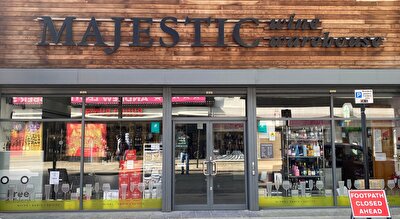
Welcome to Majestic Covent Garden

Covent Garden

Contact Information

T:
020 7379 4501
F:
020 7379 4501
E:

Opening hours

Mon - Fri: 8.30am - 7pm
Sat: 10am - 7pm
Sun: 10am - 3pm
Bank Hol: 10am - 3pm

Store Address

24-25 Drury Lane
London
WC2B 5RH
United Kingdom
  • Fine Wine
  • Free Chiller Bin Loan
  • Free Courses
  • Free Delivery
  • Free Glass Loan
  • Free Parking
  • Free Tasting

News & Events

Latest news from the store

  • May25

    25 May 2012 - 31 May 2012, 08:30 - 19:00

    New Zealand Tasting Week

    Call in and try some of the great NZ wines we have open to taste...they're not all Sauvignon Blanc! There is 20% off as well.

  • May31

    31 May 2012, 18:00 - 19:30

    Wine Course

    Come and join us for this 90 minute introduction to wine. It covers eveything from how to taste a glass of wine to discovering perfect food and wine match and it completely FREE!

    Booking required - reserve a place...
  • May17

    Wine of the Week - Brunello di Montalcino 2007, Banfi

    Becky

    Brunello di Montalcino 2007, Banfi - £28  Buy 2 save £8  £24

    Castello Banfi is a family owned vineyard estate and winery in the Brunello region of Tuscany. The grapes for this Brunello are sourced from hillside sites with calcareous sandy topsoil and rounded stones.

    A full bodied wine with hints of liquorice and chocolate complements the concentrated, velvety cherry fruits on the palate. Very well integrated tannins and long finish. Enjoy over the next 5 to 10 years.

    Ideal partner to a roast garlic and thyme seasoned lamb with braised red cabbage and red wine sauce.

  • May10

    Styles of Port

    Becky

    There are two broad categories when looking at the different styles of port: those that have been aged in cask and those that are aged in bottle. Cask aged ports are fined and filtered and are ready to drink straight after bottling. Bottle aged ports have been aged for a short time in cask and then bottled without filtration. It could take anything up to 30 years before they are ready to drink.

    In 2002 the official legislation was tighten and the following categories are now permitted:

    Ruby – Ruby ports are simple and inexpensive. They are aged in bulk for 2-3 years and then bottled young while they still have their deep ruby colour and fiery character. They typically have uncomplicated berry fruit characters. Pasteurisation is sometimes used however this can result in a ‘stewed’ character.

    Premium Ruby – This style has more colour and depth than ruby port and may sometimes be bottle as a ‘reserve’.

    Tawny – Tawny ports have an amber-brown or tawny colour as they have been aged in wood much longer than a ruby port. They are often produced from grapes grown in the Baixo Corgo region where the grapes rarely ripen so they can lack depth and intensity of fruit. White port or adapting vinification methods can be used to adjust the colour. Bulk tawnys are often left up river rather than being matured in Vila Nova de Gaja, this speeds up the maturation process resulting in a slight brown tinge at the rim. However it can also result in a lack of freshness and primary fruit characters that are traditionally present in young ports.

    Aged Tawny – These wines are left to age in cask for six years or more and have a tawny colour and soft silky character. Most wines that have an indication of age on the bottle are an approximation as the port is a blend of a number of vintages. The wines used in aged tawnys are very high quality and in other years may be used for vintage ports. The label must state the date of bottling and that the wine has been matured in oak.
    Colheita – meaning ‘harvest’ or ‘crop’. These wines are best understood as a tawny port from a single year and are very different to vintage ports. They must also be aged in wood.

    Vintage Port – These ports are the most expensive style on the market but account for not more than 1% of total port sales. They spend 2-3 years in oak before being blended and bottled, the subsequent ageing is then down to the consumer. Only the grapes from the best vineyard, generally from the Cima Corgo, go into these wines. They are picked at optimum ripeness following an outstanding growing season. The IVDP must approve samples and propose quantities in the second year after the harvest before a vintage can be declared. Whether or not a shipper declares a vintage is largely depended on if there is sufficient quantity and commercial demand. The 1931 harvest was is an example of on outstanding vintage that was undeclared due to commercial reasons. Roughly speaking, three vintages are declared a decade. These wines are high in phenolics when young and thrown a heavy deposit so always need to be decanted.
    Single-quinta vintage – These wines are produced in much the same way as vintage ports and made in good but undeclared years. In declared years these wines would be used to make up the final vintage blend. Unlike vintage port, some single-quinta ports are held back and only released when they are ready for drinking, this could be up to 10 years after the harvest.

    Late Bottled Vintage (LBV) – These are wines from a single year that are bottled between the fourth and sixth year after the harvest. Three different styles of LBV port have evolved: LBV’s bottle without filtration –these wines are made in good, undeclared years and are ready to drink younger than a vintage port. Envelhecido em Garrafa or ‘bottle matured’ – these are matured in bottle for a minimum of three years before being released. They have much of the same depth as a vintage port. Filtered LBV’s – These are LBV ports that have been fined and sometimes filtered and cold stabilized. However the process can sometimes strip much of the character out of the wine.

    Crusted – These are named after the ‘crust’ or deposit that they throw in the bottle. The wines are a recent creation and are design to appeal to vintage port drinker. Like vintage ports they continue to develop in the bottle and need to be decanted. They offer a dark full-bodied wine at a lower price than vintage ports. They are exported after three years in bottle.

    Garrafeira – Meaning ‘private cellar’ or ‘ reserve’ is more commonly associated with table wines. It was introduced to the IVDP’s port classifications in 2002 when the producer Niepoort created a style. It comes from a single year and is aged in 5 or 10l glass demi-johns for a minimum of 7 years before being bottled. However most of the wines are aged much longer than the minimum, sometimes up to 40 years. It is then decanted off the sediment and bottled in 750ml bottles. The resulting wines have a depth of fruit with the delicate silky texture associated with tawny port. There are three dates on the label: harvest date, date of bottling (into demi-johns) and date of decanting (into 750ml bottles).

    White port – These are made in much the same way as red ports except that the maceration period is much shorter or non-existent. Most, even those labelled dry or extra dry, have some residual sugar and the intensely sweet wines are labelled ‘Lagrima’ meaning tears. The wines labelled ‘Leve seco’ (light dry) are lower in alcohol, 16.5 – 17% abv rather than the usual 16 -20% abv. Most commercial white ports are aged for 18 months in stainless steel, oak ageing results in a golden colour and a dry, nutty tang. The best varieties for making white port are considered to be Gouveio, Malvasia Fina and Viosinho.

    Moscatel – This is one of over 30 grape varieties used to make white port but is occasionally used in its own. It produces a sweet fortified white wine with aroma characteristics similar to Muscat. It is a speciality of the town of Favaios on the north bank of the Douro.

    Tune back in next time for a look at the different port producers of the Douro!

  • May9

    New in for the Summer

    Becky

    New in for the Summer

    Sipsmith Summer Cup - £18 (50cl)

    Sipsmith's take on the quintessentially Great British Summer drink. Deliciously refreshing and bursting with natural flavours of Earl Gray, Lemon, Verbena and Cucumber. The perfect accompliment to what is going to be a Britsh Summer to celebrate! Mixed with lemonade and top with seasonal fruit...perfect.

  • May17

    Wine of the Week - Brunello di Montalcino 2007, Banfi

    Becky

    Brunello di Montalcino 2007, Banfi - £28  Buy 2 save £8  £24

    Castello Banfi is a family owned vineyard estate and winery in the Brunello region of Tuscany. The grapes for this Brunello are sourced from hillside sites with calcareous sandy topsoil and rounded stones.

    A full bodied wine with hints of liquorice and chocolate complements the concentrated, velvety cherry fruits on the palate. Very well integrated tannins and long finish. Enjoy over the next 5 to 10 years.

    Ideal partner to a roast garlic and thyme seasoned lamb with braised red cabbage and red wine sauce.

  • May10

    Styles of Port

    Becky

    There are two broad categories when looking at the different styles of port: those that have been aged in cask and those that are aged in bottle. Cask aged ports are fined and filtered and are ready to drink straight after bottling. Bottle aged ports have been aged for a short time in cask and then bottled without filtration. It could take anything up to 30 years before they are ready to drink.

    In 2002 the official legislation was tighten and the following categories are now permitted:

    Ruby – Ruby ports are simple and inexpensive. They are aged in bulk for 2-3 years and then bottled young while they still have their deep ruby colour and fiery character. They typically have uncomplicated berry fruit characters. Pasteurisation is sometimes used however this can result in a ‘stewed’ character.

    Premium Ruby – This style has more colour and depth than ruby port and may sometimes be bottle as a ‘reserve’.

    Tawny – Tawny ports have an amber-brown or tawny colour as they have been aged in wood much longer than a ruby port. They are often produced from grapes grown in the Baixo Corgo region where the grapes rarely ripen so they can lack depth and intensity of fruit. White port or adapting vinification methods can be used to adjust the colour. Bulk tawnys are often left up river rather than being matured in Vila Nova de Gaja, this speeds up the maturation process resulting in a slight brown tinge at the rim. However it can also result in a lack of freshness and primary fruit characters that are traditionally present in young ports.

    Aged Tawny – These wines are left to age in cask for six years or more and have a tawny colour and soft silky character. Most wines that have an indication of age on the bottle are an approximation as the port is a blend of a number of vintages. The wines used in aged tawnys are very high quality and in other years may be used for vintage ports. The label must state the date of bottling and that the wine has been matured in oak.
    Colheita – meaning ‘harvest’ or ‘crop’. These wines are best understood as a tawny port from a single year and are very different to vintage ports. They must also be aged in wood.

    Vintage Port – These ports are the most expensive style on the market but account for not more than 1% of total port sales. They spend 2-3 years in oak before being blended and bottled, the subsequent ageing is then down to the consumer. Only the grapes from the best vineyard, generally from the Cima Corgo, go into these wines. They are picked at optimum ripeness following an outstanding growing season. The IVDP must approve samples and propose quantities in the second year after the harvest before a vintage can be declared. Whether or not a shipper declares a vintage is largely depended on if there is sufficient quantity and commercial demand. The 1931 harvest was is an example of on outstanding vintage that was undeclared due to commercial reasons. Roughly speaking, three vintages are declared a decade. These wines are high in phenolics when young and thrown a heavy deposit so always need to be decanted.
    Single-quinta vintage – These wines are produced in much the same way as vintage ports and made in good but undeclared years. In declared years these wines would be used to make up the final vintage blend. Unlike vintage port, some single-quinta ports are held back and only released when they are ready for drinking, this could be up to 10 years after the harvest.

    Late Bottled Vintage (LBV) – These are wines from a single year that are bottled between the fourth and sixth year after the harvest. Three different styles of LBV port have evolved: LBV’s bottle without filtration –these wines are made in good, undeclared years and are ready to drink younger than a vintage port. Envelhecido em Garrafa or ‘bottle matured’ – these are matured in bottle for a minimum of three years before being released. They have much of the same depth as a vintage port. Filtered LBV’s – These are LBV ports that have been fined and sometimes filtered and cold stabilized. However the process can sometimes strip much of the character out of the wine.

    Crusted – These are named after the ‘crust’ or deposit that they throw in the bottle. The wines are a recent creation and are design to appeal to vintage port drinker. Like vintage ports they continue to develop in the bottle and need to be decanted. They offer a dark full-bodied wine at a lower price than vintage ports. They are exported after three years in bottle.

    Garrafeira – Meaning ‘private cellar’ or ‘ reserve’ is more commonly associated with table wines. It was introduced to the IVDP’s port classifications in 2002 when the producer Niepoort created a style. It comes from a single year and is aged in 5 or 10l glass demi-johns for a minimum of 7 years before being bottled. However most of the wines are aged much longer than the minimum, sometimes up to 40 years. It is then decanted off the sediment and bottled in 750ml bottles. The resulting wines have a depth of fruit with the delicate silky texture associated with tawny port. There are three dates on the label: harvest date, date of bottling (into demi-johns) and date of decanting (into 750ml bottles).

    White port – These are made in much the same way as red ports except that the maceration period is much shorter or non-existent. Most, even those labelled dry or extra dry, have some residual sugar and the intensely sweet wines are labelled ‘Lagrima’ meaning tears. The wines labelled ‘Leve seco’ (light dry) are lower in alcohol, 16.5 – 17% abv rather than the usual 16 -20% abv. Most commercial white ports are aged for 18 months in stainless steel, oak ageing results in a golden colour and a dry, nutty tang. The best varieties for making white port are considered to be Gouveio, Malvasia Fina and Viosinho.

    Moscatel – This is one of over 30 grape varieties used to make white port but is occasionally used in its own. It produces a sweet fortified white wine with aroma characteristics similar to Muscat. It is a speciality of the town of Favaios on the north bank of the Douro.

    Tune back in next time for a look at the different port producers of the Douro!

  • May9

    New in for the Summer

    Becky

    New in for the Summer

    Sipsmith Summer Cup - £18 (50cl)

    Sipsmith's take on the quintessentially Great British Summer drink. Deliciously refreshing and bursting with natural flavours of Earl Gray, Lemon, Verbena and Cucumber. The perfect accompliment to what is going to be a Britsh Summer to celebrate! Mixed with lemonade and top with seasonal fruit...perfect.

  • May9

    Viticulture and Winemaking in the Douro

    Becky

    The vineyards of the Douro are naturally sheltered from the effects of the Atlantic by the Serra do Marão mountains. Average rainfall in the far east of the Douro is 400mm compared to that of 1,200mm on the coast and summer temperature can reach as high of 35 degrees. Top soils in the region are shallow and stony with low nutrient content. Over hundreds of years vineyards have been establish to deal with the extreme geography and climate of the region. Vines are planted on terraces carved out of the valley sides, sometime only a metre or so wide, however as the schist fractured vertically it enabled the vines to root deeply in search of water.

    In the 1970’s and 80’s viticulture went under a number of radical changes. The river was progressively dammed to produce a number of narrow lakes. More significantly a shortage of labour and rising labour costs meant that vineyard owners had to seek alternative to the tiny terraces with their high retaining walls. In the late 1980’s bulldozers were used to create a system of new terraces know as ‘patamares’. The costly retaining walls were replaced by inclined ramps bound together by seasonal vegetation and small caterpillar tractors were able to work the vineyards due to an increase in vine spacing. Some producers adopted a vertical planting system with vine rows running up and down the natural slope.

    The harvest in the Douro starts in late September and lasts for around three weeks. Yields in the region are amount the lowest in the world.

    There are more than 80 varieties of grape authorized for the production of port however few growers have a detailed knowledge of what they have growing in the vineyard. Often vineyards have 20 or 30 different varieties growing in the same plot; a wine produced from such a vineyard is often referred to as a ‘field blend’. Since the 1970’s more orderly planting of vines has been carried out as research conducted by Cockburn and Ramos Pinto has identified the best varieties: Touriga National, Tinta Barroca, Touriga Franca, Tinta Roriz (the Tempranillo of Spain) and Tinto Cão.

    Once the grapes have been harvested they undergo a rapid extraction of colour and tannin with a vigorous maceration process. This is due to the short amount of time that the juice is in contact with the skins before it is fortified. The tradition of treading the grapes by foot in ‘Lagares’, low stone troughs build of granite, is still carried out by some producers. It is considered the best way to crush the grapes as the foot is able to break up the grape without crushing any of the pips. In the 1960’s and 70’s, due to labour costs, some producers started using autovinification tanks which require no external power source and some producers now use robotic lagares or automated treading machines which were originally introduced by Symingtons. They are becoming more widely used for the production of premium quality ports but are consider too expensive for large volumes of standard quality port.

    The alcohol produced and the increase in temperature of the fermenting grape must is what encourages the extraction of the phenolics vital for the character of port. Once the sugar content has declined sufficiently (6-8 baume), usually after 24-36 hours, the wine is fortified using grape spirit of 77% abv. It is run off into a vat containing 1/5 of this spirit which kills the yeast and arrests the fermentation.

    Brandy was originally added to the Portuguese wines to stabilise them before shipping them to England. The discovery of the technique of adding spirit during rather than after fermentation happened in 1678 when, in the town of Lamego high above Douro in the mountains, an abbot was found to be using the procedure to produce sweet, alcoholic red wine.

    Until 1992 the spirit used to fortify the wines had to be purchased from the Casa do Douro which controlled distribution and had set pricing. Since entering the EU the Portuguese producers have been allowed to purchase any spirit they like providing it is approved by the Port Wine Institute and is of 77% norm of alcoholic strength. Many of these are now distilled from Europe’s ‘wine lake’.
    Once the wine has been fortified it remains at the quinta until the spring after the harvest. It is then shipped downstream to Vila Nova de Gaja, across the river from Oporto, which is traditionally where the shipper’s are based. The wine is matured in lodges there are the cooler and more humid climate is considered beneficial for the slow cask aging needed.

    All shipper are required to adhere to the ‘Lei do Tergo’ or Law of the Third which restricts them from selling more than a third of their stock in any one year. The IVDP taste and analyse a sample from each shipper to ensure quality before issuing the guarantee seal that appears on the neck of every bottle of port leaving the region.

    Tomorrow...styles of port.

  • May8

    Wine of the Week - Casa Lapostolle 'Cuvee Alexandre' Syrah 2007

    Becky

    Wine of the Week - Casa Lapostolle 'Cuvee Alexandre' Syrah 2007

    Casa Lapostolle 'Cuvee Alexandre' Syrah 2007 -

    £19.99 20% off Chilian wines £15.99

    Alexandra Marnier-Lapostolle, the dynamic young French founder of this innovative Chilian winery, produces wine of spectacular quality. Made from fruit grown on ungrafted vines the grapes are vinified in a gravity-fed winery.

    The wine is powerful and intense with a deep purple colour. On the palate there is savoury meatiness that opens up to blueberries, blackcurrents and spices with toasted nuts and hints of oak lingering on the finish.

    Enjoy this wine with beef, game or boar and decant an hour prior to drinking if possible.

  • May25

    25 May 2012 - 31 May 2012, 08:30 - 19:00

    New Zealand Tasting Week

    Call in and try some of the great NZ wines we have open to taste...they're not all Sauvignon Blanc! There is 20% off as well.

  • May31

    31 May 2012, 18:00 - 19:30

    Wine Course

    Come and join us for this 90 minute introduction to wine. It covers eveything from how to taste a glass of wine to discovering perfect food and wine match and it completely FREE!

    Booking required - reserve a place...

Twitter

Follow @majesticcovgdn

Our Team

  • Chris

    Manager

    I have been working for Majestic for nearly six years now in stores all over the south of England including Cambridge, Muswell Hill and Gidea Park. I am a huge fan of Riesling but my real enological passion is for Sherry. To my mind definitely the best value wines in the world!!

  • Alec

    Senior Assistant Manager

    I have been working for Majestic for just over 3 years now, in this time I've had the good fortune to taste a large variety of wines. I am a bit of a traditionalist with White Burgundy and Bordeaux among my favourites and you can't go wrong with a nice glass of Champagne.

  • Chris

    Trainee Manager

    I have been with Majestic for 18 months and have worked in Oxfordshire prior to moving back home to London. When it comes to wine my ethos is that every variety and style has value and can be enjoyed in the right environment. My current favourites are rich, new world Chardonnay and Cabernet Sauvignon in its various guises however, my desert island wine would have to be a top qaulity Gran Reserva Rioja.

  • Becky

    Trainee Manager

    I have been working for Majestic for almost a year now. Prior to working for the company I spent a number of years working in the wine industry in New Zealand so Pinot Noir will always have a spot in my heart. I moved back to London last year to further my wine knowledge and study for the WSET Diploma which I start in mid January. I have discovered I have quite expensive taste in wine, Cote Rotie and White Burgundy currently being my favourite.

  • Szymon

    Driver

  • Steve

    Driver

« back to the Store Locator